The Citroën DS: 6 highlights and technical innovations
Dec 11, 2025 • 8 minutes reading time
The Goddess of the Road: An Ode to the Citroën DS and Her Revolutionary Innovations
In the history of the automobile, there are good cars, great cars, and icons. And then there is the Citroën DS.
When we open the hood of a DS in the workshop of Tonny’s Classic Drive, we are not just looking at an engine block. We are looking at a turning point in industrial history. When the DS was unveiled in 1955 at the Paris Motor Show, the effect was comparable to the landing of a flying saucer. The world was still driving in coach-like vehicles with separate fenders and rigid axles; Citroën presented the future.
In this article, I will take you back to that shocking unveiling and dive into the technical wonders that make the ‘Snoek’, despite a few persistent myths, the most innovative car of the 20th century.
The Unveiling of the Citroën DS in 1955: A Revolution at the Paris Motor Show
On October 6, 1955, at 09:00 in the morning, the cloth was lifted from the Citroën DS19. The audience gasped. Compared to the bulbous, pre-war shapes of the competition, the DS looked almost liquid, shaped by the wind itself.
The sales numbers of that day are legendary. Although the exact numbers vary in retellings—often 743 orders in the first quarter hour are mentioned—it is certain that by the end of the day 12,000 signatures had been placed. After the fair closed, this number had risen to 80,000. An unprecedented madness that shook the automotive industry to its core.
The name was no coincidence. In French, ‘DS’ is pronounced as Déesse, which means Goddess. And she drove like one.
Renting a Citroën DS in Groningen – The Goddess, at Tonny’s Classic Drive
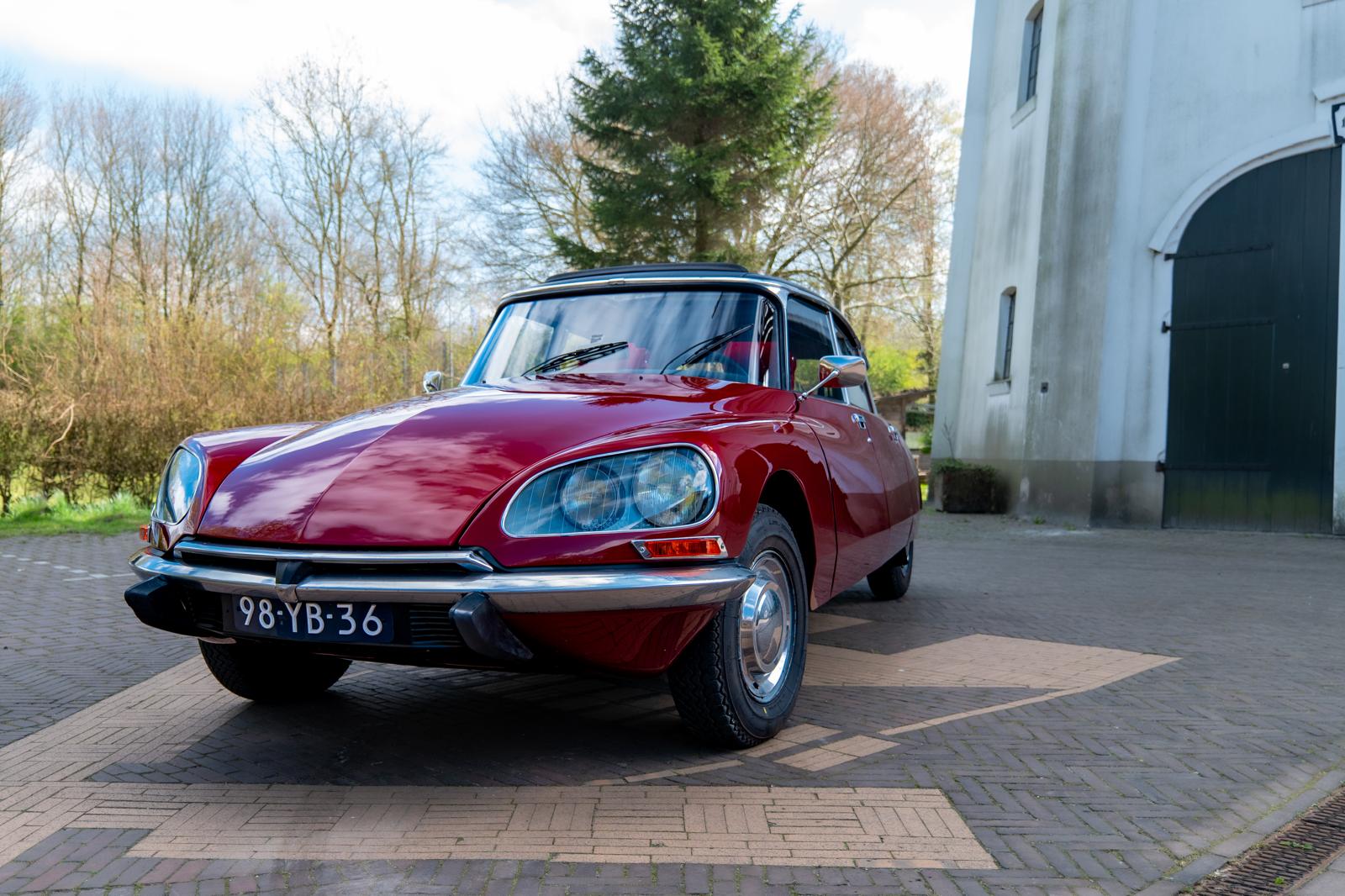
At Tonny’s Classic Drive in Groningen we rent out a beautiful original Citroën DS — a car that, as you’ve read above, has captured the hearts of car enthusiasts since her introduction in 1955. Are you looking for an oldtimer to rent in Groningen for a wedding, photoshoot or a unique day out? Then this DS is the perfect eye-catcher.
Information About the Technology of the Citroën DS
There is much to write about the innovative technology of our Citroën DS. Below, we delve deeper into the specific technical innovations of the DS. There is also a lot to write about how our DS was completely restored. We will certainly dedicate an article to this.
Hydropneumatic Suspension of the Citroën DS: The System That Changed the Automotive Industry
If you ask us what the soul of the DS is, it is without a doubt the hydropneumatic system, the life’s work of engineer Paul Magès.
Most cars of the time used metal springs. The DS replaced these with spheres filled with nitrogen gas and fluid. Because gas is compressible and fluid is not, the gas acts as a spring. A central high-pressure pump sends hydraulic fluid through the system.
This created three unique properties:
- Unmatched Comfort: The car smooths out uneven surfaces in a way that even modern luxury cars struggle to match.
- Constant Ride Height: Whether you drive alone or with five people and luggage; the car automatically pumps itself back to a level position (height control).
- Variable Ground Clearance: The driver can adjust the height for slow terrain work or wheel replacement.
Tonny’s Technical Note: Be careful when purchasing! The early models (until Sept. 1966) used the red LHS fluid (Liquide Hydraulique Synthétique). This absorbs moisture and can cause corrosion. From model year 1967 onwards, the superior green LHM (Liquide Hydraulique Minéral) was used.
Citroën DS Hydraulic System and Transmission: The Semi-Automatic Citromatic
The hydraulics did more than just suspension. Citroën used the enormous pressure of the system to completely relieve the driver.
The Citromatic (BVH)
One of the most remarkable features on the DS was the Boîte de Vitesses Hydraulique. This was a semi-automatic gearbox without a clutch pedal. As soon as you move the lever, the hydraulic brain disengages the engine, shifts the gearbox and re-engages. Velvety smooth operation is required, but unmatched comfort once accustomed to it.
The “Champignon”: The Unique Citroën DS Brake Pedal
When you step into a DS, you won’t find a pedal on the floor but a rubber button: the famous champignon. A pressure-sensitive valve that controls the high-pressure brake system. ID models did have a conventional brake pedal.
Citroën DS Disc Brakes: The First Large European Car with Standard Power-Assisted Disc Brakes
It is often claimed that the DS was the very first car with disc brakes. That is not entirely correct, but it *was* the first large European production car to be equipped with power-assisted front disc brakes as standard.
These were mounted inboard, directly against the transaxle. This resulted in:
- Lower unsprung weight for better comfort.
- More space in the suspension, enabling the unique pivot point in the center of the tire.
Citroën DS Design and Aerodynamics: The Innovative Work of Flaminio Bertoni
Flaminio Bertoni’s design focused on aerodynamic efficiency. The DS had a drag coefficient of only 0.36.
- Tear-Drop Design: Wider track at the front than the rear for stability and lower air resistance.
- Innovative Materials: Fiberglass roof and aluminum hood for weight reduction.
Citroën DS Safety Innovations: Advanced Passive Safety
The DS was full of safety features, some intentionally designed, others incidental due to its construction.
- Single-Spoke Steering Wheel: Bends during a collision and reduces impact on the driver.
- Natural Crumple Zones: The drivetrain dives downward in a frontal impact instead of intruding into the cabin.
The Swiveling Headlights of the Citroën DS: The Legendary ‘Eyes of the Cat’
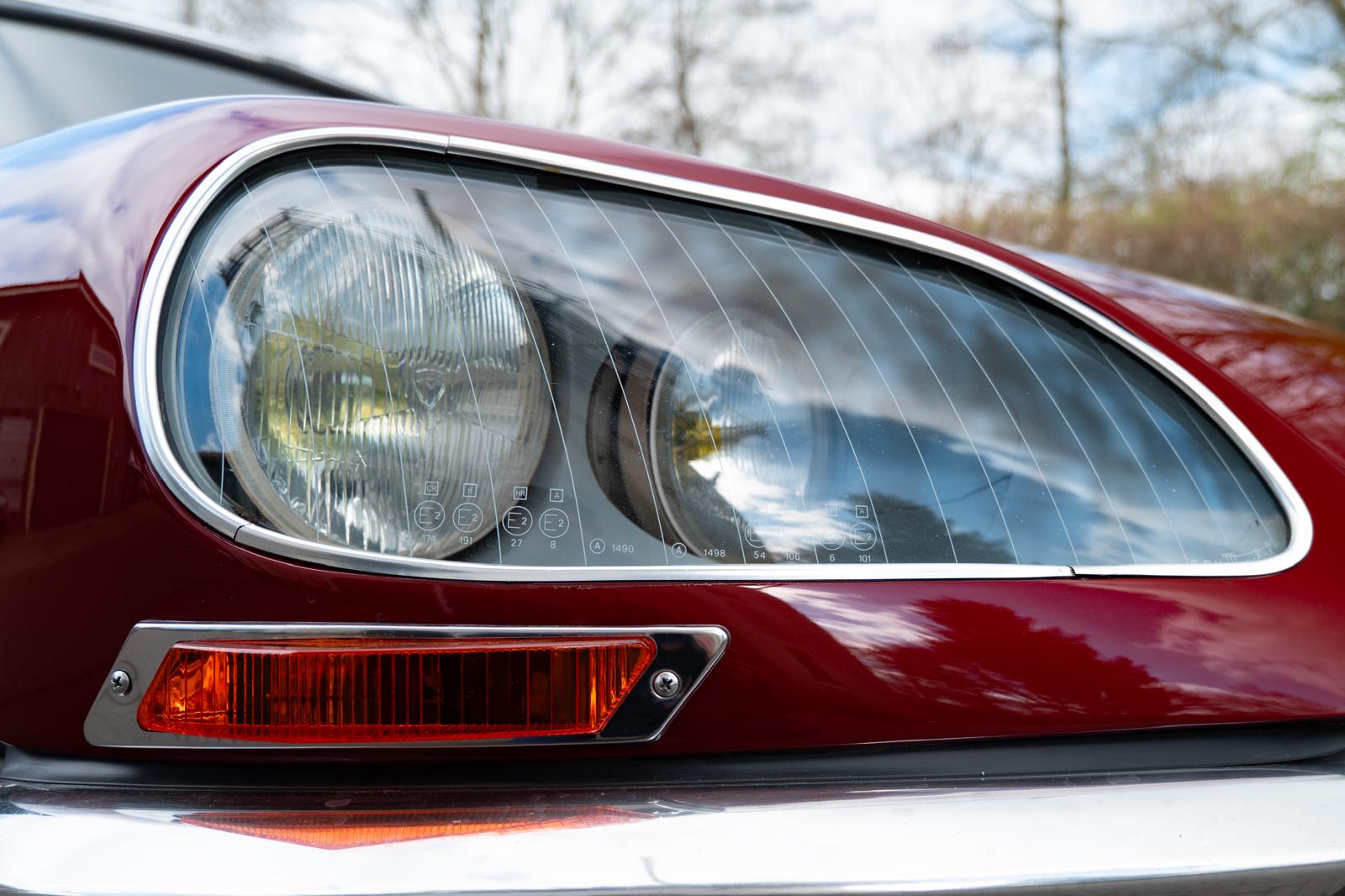
In 1967 the DS received a facelift. From 1968 onwards, the inner two headlights were swiveling: they turned with the steering wheels so drivers could see into the corner. Additionally, there was an automatic height adjustment linked to the suspension.
The Citroën DS that Saved President De Gaulle: The Assassination Attempt at Petit-Clamart
The legendary status of the DS was sealed during the assassination attempt on Charles de Gaulle on August 22, 1962. Several tires were shot through, but thanks to the hydropneumatic suspension and special Michelin tires, the DS remained controllable. The driver managed to escape at high speed, saving the president’s life.
For dignitaries, the DS Prestige followed later, often with a partition window and telephone.
Citroën DS Model Overview: ID, DS Break, Pallas and Chapron Cabriolet
- ID (Idée): Budget-friendly version with simpler hydraulic system.
- Break (Safari): Spacious, strong and ideal for work and family thanks to height control.
- Pallas: Top-class luxury with extra insulation, materials and finish.
- Cabriolet Chapron: Hand-built, exclusive and rare convertible by Henri Chapron.
Why the Citroën DS Is Still Considered a Masterpiece
When production stopped in 1975 after nearly 1.5 million units, the car was still more modern than many competitors. In 1999, the DS was named the Most Beautiful Car of All Time and finished third in the “Car of the Century”.
For Tonny’s Classic Drive, the DS is a driving manifesto: proof of what is possible when engineers show courage and break conventions. Owning and driving a DS is an experience every car enthusiast should have at least once.